
Welcome to RhodiolaRosea.org, the original site founded by pioneering scientist and researcher Dr. Zakir Ramazanov. We’re dedicated to providing a thorough and hype-free approach to exploring the research and benefits of rhodiola rosea extract, sometimes referred to as the Siberian Rhodiola. Whether you’re interested in using R. rosea for depression, to alleviate mild anxiety or to improve your endurance, I encourage you to discover more about the potential uses of this safe, natural supplement.
While there is exciting potential relating to the broad benefits and uses of R. rosea, I will try to provide a rational approach on this topic. Despite the excitement for this herbal remedy in the alternative health industry, Rhodiola rosea is not a magical solution to all your problems. However, it is a promising, safe and natural supplement worth researching and considering.
This home page will provide the key points about R. rosea and adaptogens, while other posts will provide more detail on specific aspects of it. I’ve also added Dr. Zakir Ramazanov’s original and still-excellent phytomedicinal research in the form of downloadable PDFs, accessible from the sidebar over there to the right. I hope you learn something with your visit, and I wish you all the best in health and in life.
Use these index questions to navigate this introductory guide:
- Why A Website On Rhodiola Rosea Extract?
- What Is Rhodiola Rosea?
- What Are Adaptogens?
- How Does Rhodiola Work?
- Why Take An Adaptogen?
- What Is the Right Rhodiola Dosage?
Why A Website On Rhodiola Rosea Extract?
Rhodiola rosea — sometimes referred to as Golden Root, Roseroot, Arctic Root or Aaron’s Rod — is an adaptogen with increasing clinical evidence suggesting a wide range of benefits with exceptionally few side effects and dangers. I’ve chosen to implement this website because I want people to realize that unlike many herbal remedies, which have questionable or at least debatable evidence of their usefulness, R. rosea appears to be a legitimate supplement for a range of practical purposes, from greater mental performance to greater physical endurance to decreased fatigue in strenuous circumstances. So whether you choose a rhodiola capsule or a rhodiola rosea extract, you’re using one of the few herbal remedies where case studies indicate genuine effectiveness, despite minimal side effects.
What Is Rhodiola Rosea?
Rhodiola rosea, a perennial plant of the Rhodiola genus in the Crassulaceae family, grows in cold, harsh alpine regions of the Northern Hemisphere (thus it is a Holarctic ecozone species of Rhodiola). These regions include the Arctic, the Rocky Mountains, mountainous areas of central Asia, the Alps, the Carpathian Mountains, the Pyrenees, Scandinavia, Iceland and northern Russia (Siberia). It is a pretty little plant with yellow flowers, but it exhibits a hardiness by easily thriving in harsh, craggy environments. Because Rhodiola rosea features both distinctly male and female plants, it is a dioecious plant, and because of its tendency to grow among rocks and stones, it is sometimes referred to as a stonecrop.
We’re most interested in Rhodiola rosea’s rugged, pale root, which contains a dark, aromatic sap. When cut, the root emits a potent rose-like aroma. This rhodiola species name, rosea, originates from that strong rose aroma. Multiple strong stems grow from the root, growing from 10 to 30 inches in height, and from each stem blossoms its distinct yellow flower.
Traditionally, Russians, Siberians and Scandinavians used R. rosea to improve their vitality in the harsh conditions present in the bitter cold climates and high altitudes. This golden root later developed a rather mysterious reputation as Soviet KGB agents relied on it to improve their physical and mental endurance while persevering stressful conditions and situations.
After centuries of use in China and Russia and decades of studies by the Soviet Union, rhodiola rosea’s western research was spearheaded by Dr. Zakir Ramazanov when he left the Soviet Union in 1989 to conduct research at the University of Umea in Sweden. He later joined Louisiana State University and the National Science Foundation in the United States. His scientific work and his efforts to promote the research of Siberian phytomedicines laid the foundation for modern research on adaptogens such as rhodiola rosea.
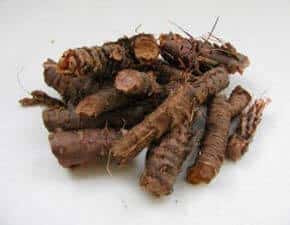
Rhodiola rosea has many different names and labels, which collectively can make following rhodiola research and discussion a little confusing. The following terms refer to rhodiola rosea: R. rosea, sedum rosea, Golden Root, Roseroot (or Rose Root), Arctic Root, Aaron’s Rod, Rhodiola arctica, and Rhodiola iremelica, or broadly as Siberian Rhodiola Rosea. In Europe and Latin America you may see it spelled rodiola and rodiola rosea (without the ‘h’). In traditional Chinese medicine, where it has been used extensively, it is referred to as Hong Jing Tian.
The prominent constituents believed to enact rhodiola’s benefits include rosarin, rosavin, rosin (collectively called rosavins in many studies) and salidroside. Most rhodiola supplements are made from the rhodiola root. When you examine a rhodiola extract, or any other R. rosea supplement, make sure it contains a minimum 3% rosavins and 1% salidroside.

Rhodiola crenulata is a common adulterant or substitute, but rhodiola crenulata does not contain the necessary rosavins that provide most of R. rosea’s benefits (although it does contain salidroside). Rhodiola rhodantha and rhodiola alsia are also common rhodiola species, but these are better known for their beauty than for their medicinal uses. So, make sure you get the right rhodiola when you select a supplement, whether you intend to take it for stress relief or to improve your stamina.
What Are Adaptogens?
Rhodiola Rosea extract is an adaptogen, a family of natural supplements that exhibit an ability to improve the human response to physical and/or mental stress and trauma. Theoretically, adaptogens help humans maintain optimal homeostasis by balancing their immune systems and endocrine hormones. The term adaptogen clearly derives from the capacity of this remedy to help organisms adapt to strenuous circumstances.
Adaptogens don’t produce the immediate physiological effects the way stimulants like caffeine do, so they are widely considered more safe and mild than other popular stimulants.
In the past decade, the most commonly sold adaptogen has been ginseng. However, rhodiola rosea extracts exhibit more tangible, distinct and immediate stimulating effects. And unlike ginseng, which is the subject of much heated debate between the medical community and the natural health community, rhodiola rosea is collecting mounting clinical evidence of its effectiveness.
Other relatively popular and natural adaptogens I may discuss on this site include Ashwagandha, Eleuthero, Holy basil, Licorice, Maca and Noni.
How Does Rhodiola Work?
Rhodiola rosea works by inhibiting subtype A and subtype B of an enzyme called monoamine oxidase, and by affecting opioid peptides (chained amino acids) like beta-endorphin (a neurotransmitter in both the central and peripheral nervous systems).
Subtype A of monoamine oxidase (MAO-A) metabolizes caffeine and serotonin (among many other things). Subtype B of monamine oxidase (MAO-B) metabolizes dopamine (among other things).
Thus, by increasing serotoneric activity rhodiola rosea lifts your mood, and by increasing dopaminergic activity it lifts your mood, sharpens your focus and increases your energy. By inhibiting caffeine metabolism it may both increase and extend its effects.
In addition, rhodiola modulates cortisol production during times of physical or emotional duress. Cortisol is a steroid hormone, often called the stress hormone. Our adrenal glands produce cortisol to help us cope with stressful situations. Unfortunately, sometimes our body produces too much cortisol, or if we experience chronic stress our body produces cortisol too often, even in times when we don’t need it.
Since cortisol suppresses the immune system, counteracts insulin and metabolizes proteins, fats and carbohydrates, too much cortisol may amplify these basic functions and produce detrimental problems. Rhodiola rosea acts as a mild cortisol modulator, helping your body reduce the repercussions of excessive cortisol release by your adrenal glands.
Please see Rhodiola Rosea Pharmacology, Phytochemistry and Standardization for more extensive coverage of how this safe yet potent herbal remedy works.
Why Take An Adaptogen?
Rhodiola rosea crashed the growing natural health party when a rigorous Swedish case study suggested rhodiola has the ability to quicken memory, improve attention span, sharpen mental performance, alleviate depression, soothe mental and physical fatigue and improve human focus in difficult circumstances. You can read Newsweek’s 2003 coverage of this research, which includes comments from RhodiolaRosea.Org’s founder Dr. Ramazanov, in our reformatted release of this article: Herbal Stress Relief.
(The exact extract used in that study was SHR-5, a proprietary rhodiola rosea extract manufactured and distributed by the Swedish Herbal Institute.)
However, a broad collection of research comes from Russian and Scandinavian sources dating back decades. For references on some of these studies, please see Dr. Zakir Ramazanov’s essay on Rhodiola For Muscle Development.
Rigorous case studies suggest genuine neurochemical mechanisms produce these positive rhodiola benefits. The most well-known case studies were conducted by Dr. Richard P. Brown, an associate clinical professor of psychiatry at Columbia University College of Physicians and Surgeons, Dr. Patricia L. Gerbarg, an assistant clinical professor of psychiatry at New York Medical College, and Dr. Philip R. Muskin, the Chief of Consultation-Liaison Psychiatry at the Columbia University Medical Center and a Professor of Clinical Psychiatry at Columbia University. The results of these studies are reported in their books The Rhodiola Revolution and How to Use Herbs and Nutrients in Mental Health Care (those are links to these books on Amazon.com, where you can buy them and then read them for yourself!).
Despite these broad benefits, R. rosea features a remarkably low toxicity level. In standard clinical toxicity studies performed with rats, the lethal dose at which 50 percent of animals perish was determined to be 28.6 ml/kg, which is approximately 3,360 mg/kg. This is extremely low even compared to many common, safe herbs or frequently consumed over-the-counter pain medications.
What Is the Right Rhodiola Dosage?
Defining the “right” rhodiola dosage depends on the potency of the specific supplement, brand you’re taking and your purpose for taking it. Most rhodiola rosea supplements in North America come in either capsule or tablet form, with the tablet form often being more potent. In Russia, people take rhodiola rosea extract in a liquid tincture composed of a liquid base with a small amount of alcohol. Some rhodiola rosea tinctures are now appearing in North America as well.
To start, you want your supplement to contain a 3 to 1 ratio of rosavins to salidrosides because this is very close to the natural ratio of these important compounds in the rhodiola root. It is also the ratio most used in rhodiola rosea research. Thus, the most common standardized concentration of rosavins and salidroside is 3% rosavins and around 1% salidrosides. I’ve seen some over-hyped supplements promoting a higher concentration of rosavins, but no research or evidence supports higher dosage concentrations.
Dr. Richard P. Brown and Dr. Patricia Gerbarg recommend 100 mg capsules if possible. This allows you to vary or customize your dosage depending on your sensitivity to rhodiola rosea, or your particular purpose for taking it. For people who find themselves experiencing nervousness or the jitters after taking lower doses, the rhodiola rosea capsule can be opened and even smaller portions can be taken or mixed into teas or juices.
The most recent comprehensive clinical trial, conducted in Armenia in 2007, suggested effective daily dosage of rhodiola rosea in the 340 to 680 milligram range. This dosage provided significant benefits for treating moderate depression without causing any of the minor side effects.
However, because rhodiola rosea provides energy, most researchers and herbal remedy practitioners recommend taking it during the first half of the day to prevent it from disrupting your sleep. I recommend taking it about 30 minutes before breakfast and then again 30 minutes before lunch. When you first start taking rhodiola rosea, I suggest avoiding caffeine for about two hours before and after taking it.
Because different people react to it in different ways, I suggest starting with just a single 100 mg dose per day, then moving to two 100 mg doses each day if your body responds well to it. You can then increase your dosage as necessary to treat your particular condition. I rarely recommend a daily dose as high as 1000 mg, but let your doctor or natural health practitioner determine the right maximum rhodiola rosea dosage for you.
For more information on how to customize your rhodiola rosea dosage to achieve your desired result, be it for treating anxiety, moderate depression, improving physical endurance or another possible rhodiola treatment, read my article: Rhodiola Dosage.
Thank you for visiting Rhodiola Rosea. I hope you find my research and guides beneficial to your overall health and well-being!
Revealing A Stress-Busting Trio: Rhodiola Rosea, Omega-3, and Magnesium
Rhodiola Side Effects
Read more:
Rhodiola Side EffectsWhen Dysphoria And Anhedonia Collide
Read more:
When Dysphoria And Anhedonia CollideRhodiola Dosage
Read more:
Rhodiola DosageRhodiola Dangers
Read more:
Rhodiola Dangers